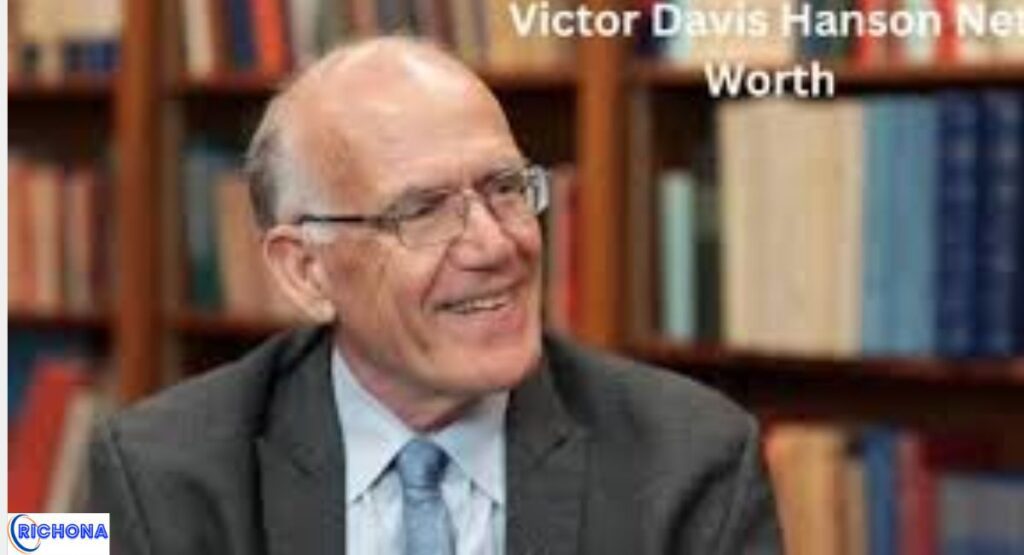
Victor Davis Hanson isn’t your typical academic. He’s a historian who knows the weight of hard work because he’s lived it — not just in classrooms but also on a California farm. For decades, he’s been one of the most respected voices in American history, culture, and politics.
Known for his deep understanding of ancient civilizations and modern society, Hanson blends scholarly insight with real-world experience. His career bridges two worlds — the quiet discipline of academia and the practical wisdom of a man rooted in the soil.
Whether he’s lecturing at universities or discussing politics on national TV, Victor Davis Hanson stands out as someone who makes history feel alive and relevant.
The Man Behind the Voice
Victor Davis Hanson was born on September 5, 1953, in the Central Valley of California. His childhood was steeped in the rhythms of farm life — long days under the sun, helping his family tend to vineyards and orchards.
Those early years shaped his view of the world. Farming taught him patience and self-reliance, while books opened his mind to the sweep of human history. He once mentioned that the discipline he learned from plowing fields wasn’t so different from writing — both require persistence and care.
It’s easy to imagine him as a young boy, balancing schoolwork with early morning chores. That mix of grit and curiosity would later define his voice as both a historian and a commentator.
Education and Academic Roots
Hanson earned his bachelor’s degree in Classics from the University of California, Santa Cruz in 1975. Later, he completed a Ph.D. in Classics at Stanford University in 1984. His studies focused on ancient Greek warfare, particularly how civilizations build, defend, and sometimes destroy themselves.
That focus on military history wasn’t just about battles and strategy — it was about human nature. How do societies survive pressure? What makes nations collapse? Those questions became central to his later work, connecting ancient lessons to modern politics.
His time at Stanford also opened doors to teaching. But Hanson wasn’t the kind of professor who lived only in theory. His farm roots kept him grounded in the practical world. That balance gave his lectures a rare authenticity.
Teaching and Influence in the Classroom
Hanson taught for many years at California State University, Fresno, where his classes quickly became legendary. Students didn’t just learn about the Greeks or Romans; they learned how those ancient lessons applied to everyday life and modern leadership.
Former students describe him as demanding but fair — the kind of teacher who pushed them to think deeply and write clearly. He wasn’t afraid to challenge opinions or spark debate.
In a world where history classes can feel like distant memories, Hanson made the past come alive. One student recalled that listening to him discuss the Peloponnesian War felt like watching a modern political drama unfold — complete with ambition, betrayal, and consequence.
Teaching provided a steady income, but more importantly, it gave him a foundation of purpose. It also set the stage for his later roles in media and public life.
A Turning Point: The Hoover Institution
Hanson’s career reached a new level when he joined Stanford University’s Hoover Institution, one of America’s leading think tanks. As a senior fellow, he began writing essays and commentary on politics, culture, and history.
This platform allowed him to speak to millions — not just students in a lecture hall, but readers across the nation. His writings explored big questions: What defines a nation? How does culture survive change? What can modern America learn from the ancient world?
He appeared on media outlets like Fox News and National Review, where his calm yet firm voice stood out amid the noise of political debate. Whether people agreed with him or not, they listened — because he had substance.
Historian, Commentator, and Public Thinker
Victor Davis Hanson’s influence goes beyond academia. He’s a historian who can explain modern politics through the lens of ancient history. His understanding of warfare and power dynamics allows him to analyze world events with unusual clarity.
For example, when discussing U.S. foreign policy, Hanson often compares modern conflicts to the rise and fall of Greek city-states or the Roman Republic. It’s not just clever — it helps readers see patterns in human behavior that repeat across centuries.
Like many public intellectuals, he’s faced criticism too. Some see his views as conservative or traditional, but even his critics acknowledge his depth of knowledge and passion for truth.
Writing Career and Bestselling Books
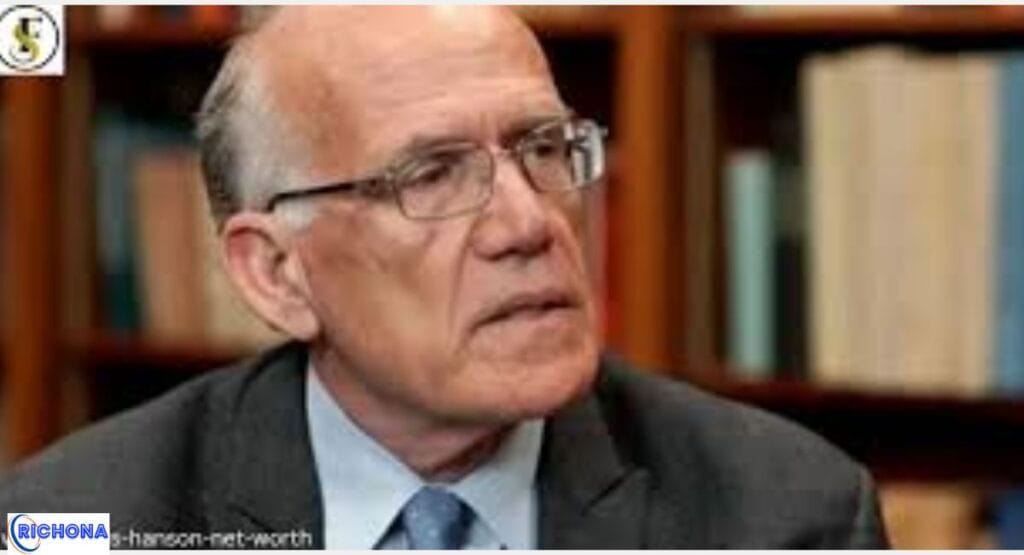
Writing is where Hanson truly shines. Over the years, he’s published more than twenty books on topics ranging from ancient warfare to modern American politics.
His 2001 book Carnage and Culture argued that Western military success stemmed not just from technology or resources, but from cultural values like individualism and freedom. The idea sparked heated debate but also cemented his reputation as a bold thinker.
Then came A War Like No Other (2004), a detailed look at the Peloponnesian War — the ancient clash between Athens and Sparta. It’s still considered one of the most accessible and engaging books on classical warfare.
More recently, The Case for Trump (2019) and The Dying Citizen (2021) brought his ideas into modern political conversations. These works explored how Western civic identity has eroded over time, echoing lessons from the fall of ancient empires.
His ability to connect thousands of years of history with today’s news is what makes him stand out.
Awards and Recognition
Over the decades, Hanson’s work has earned him national acclaim. He received the National Humanities Medal in 2007 and the Bradley Prize in 2008 — two of the highest honors for American intellectuals.
These awards recognize more than academic success. They honor his dedication to preserving cultural memory and encouraging honest public debate.
It’s worth noting that such recognition also leads to financial opportunities — speaking engagements, book deals, and collaborations. Yet, Hanson remains humble, often crediting his success to the values he learned growing up on a farm.
Victor Davis Hanson’s Net Worth in 2025
As of 2025, Victor Davis Hanson’s estimated net worth is around $5 million. His earnings come from a mix of teaching, writing, speaking, and media appearances.
He’s not the kind of scholar chasing luxury. Instead, he’s someone who values independence and stability. His wealth reflects decades of steady work rather than sudden fame.
He also continues to own and manage his family’s farm in California’s Central Valley — land that’s been in his family for generations. That property not only contributes to his financial portfolio but also keeps him connected to his roots.
| Source | Description | Contribution |
|---|---|---|
| Academic Salary | Teaching at California State University | Steady income |
| Book Royalties | Sales from published works | Major earnings |
| Speaking Engagements | Conferences, panels, media appearances | Strong income stream |
| Media Work | Commentaries, columns, and podcasts | Continuous income |
| Farming | Family land and agriculture | Long-term asset |
Unlike many public figures, he’s managed his finances carefully, choosing long-term security over short-term gain.
The Farmer-Scholar
What sets Hanson apart is how much he values his connection to the land. While many intellectuals live in cities, he stayed on his family’s farm — working the same soil his parents and grandparents did.
Farming, for him, isn’t just about crops. It’s a reminder that ideas need grounding. He once compared tending vines to nurturing civic responsibility — both require patience, tradition, and care.
If you’ve ever met someone who runs a small business while raising a family, you’ll recognize his mindset. He believes success means taking responsibility for your work and your community.
Family and Personal Life
Victor has been married to Cara Webb Hanson for many years. Though she stays out of the spotlight, she’s been a constant presence through his academic and public life.
They share a quiet, family-centered life, often away from media attention. He rarely discusses his children publicly, preferring to protect their privacy. What’s clear, though, is that family remains at the center of his values.
That focus on home and faith gives him balance. For someone constantly in the public eye, it’s refreshing to see how grounded he remains.
Addressing the Rumors
Like many public figures, Hanson has been the subject of online rumors — from having a twin brother to being involved in accidents. In truth, there’s no twin brother, and any past health concerns have long since been resolved.
He’s faced challenges like anyone else, but he’s always bounced back quickly. That resilience seems to come from his farming background — when you grow up dealing with unpredictable weather and harvests, you learn how to adapt fast.
Media Presence and Public Engagement
Hanson stays connected with the public through his popular podcast, The Victor Davis Hanson Show. In each episode, he discusses history, politics, and culture with straightforward honesty.
He’s also active on Twitter and other platforms, where he shares insights and commentary. What makes his presence different is that he speaks plainly — no jargon, no academic showmanship, just genuine reflection on issues that matter.
People relate to him because he talks about real things: national identity, civic duty, and the value of history in everyday life.
Influence and Legacy
Over the years, Hanson has become more than a historian — he’s become a voice of perspective in a time of noise. His ability to draw lessons from ancient history gives his commentary a timeless quality.
You don’t have to agree with every opinion he holds to appreciate the depth of his thinking. Whether he’s talking about ancient Sparta or modern America, his message is consistent: civilizations rise and fall based on how much they value character, community, and truth.
It’s an idea as old as history itself — and as relevant as ever.
A Modern Example of Balance
Victor Davis Hanson represents a rare kind of balance between intellect and real life. In a way, he’s like those teachers who spend their weekends fixing fences or helping with local community projects — deeply knowledgeable but still part of the world they study.
Think of how someone like Neil deGrasse Tyson makes science accessible to everyone. Hanson does something similar for history and politics. He translates complex ideas into everyday lessons about responsibility and freedom.
That’s what makes him special — he doesn’t just study the past, he helps people see themselves in it.
Final Thoughts
Victor Davis Hanson’s story isn’t about wealth in the usual sense. His net worth may be estimated at $5 million, but his true value lies in the ideas he’s shared and the minds he’s influenced.
From a small farm in Central Valley to national recognition as a historian and commentator, his journey proves that integrity and hard work still matter.
In a world where trends change overnight, Hanson remains steady — a scholar, farmer, and citizen who believes that understanding the past is the only way to build a better future.
Meta Description:
Discover Victor Davis Hanson’s inspiring life story — from humble farming roots to becoming one of America’s leading historians. Learn about his net worth, books, career, and enduring influence in 2025.
Most read
Rebecca Sneed Net Worth 2025: The Untold Story of Lyle Menendez’s Wife
Kaitlin Butts – Age, Birthday, Career, Songs, Husband, and Net Worth (2025)

Alita Betal is a digital researcher and content writer who focuses on celebrity biographies, net worth insights, public figures, and viral life stories. She explores success journeys, career highlights, and trending entertainment updates, delivering well-researched, easy-to-read content that helps readers understand the real stories behind famous names and current online trends. success journeys of their favorite public figures. My work also includes covering breaking trends, entertainment updates,